There’s a quiet risk sitting inside almost every successful business.
It doesn’t show up on your P&L. It’s not obvious on your balance sheet. And it won’t hit you until you start thinking about stepping away.
It’s called the wealth gap, and it’s the single biggest reason exit planning should start years earlier than most owners think!
The wealth gap is the difference between what you need from your business to fund your life after you exit, and what your business is actually worth today (net of taxes, fees, and reality).
From a financial planning standpoint, the wealth gap is also the difference between the amount of assets you need to fund your post-exit lifestyle, and how much you currently have saved plus the net proceeds from the sale of the business.
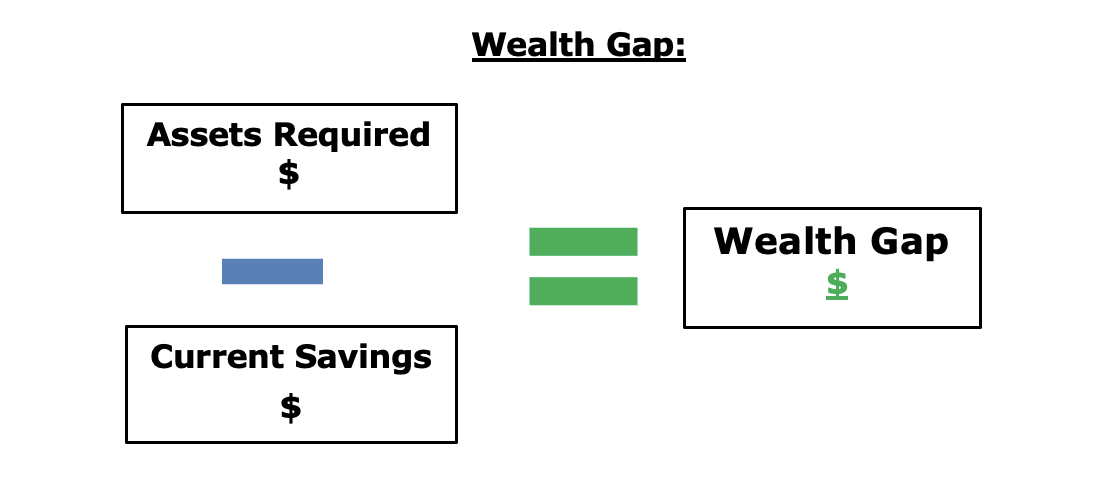
Most business owners assume these two numbers are close. They’re usually not.
Business owners tend to overestimate value and underestimate needs. Here’s why:
1. Your business is your biggest asset, but also your most concentrated risk. It might represent 70–90% of your net worth.
2. Valuation ≠ Proceeds. A $5M valuation doesn’t mean $5M in your pocket. After taxes, deal structure, earnouts, and fees, the net can be significantly lower.
3. Lifestyle creep is real. As income grows, so do expectations. The number required to maintain your lifestyle post-exit is often much higher than anticipated.
4. Transferable value vs. owner-dependent value. Buyers don’t pay top dollar for businesses that rely entirely on you.
A Simple Example
Let’s say:
That’s a $2M-$3M wealth gap. And that’s before taxes!
Where most business owners get it wrong? They start thinking about an exit when they’re ready to leave. In addition, they’re under the assumption their investment advisor will come up with a plan after the sale is completed.
But closing the wealth gap requires time, not just intention. You don’t fix this in 12 months. You fix it over 3–5+ years of intentional planning and execution. In the best situations, you will understand your wealth gap and work on closing it over many years. Think of this as being very similar to traditional retirement planning.
This is why exit planning is a vital part of ongoing financial planning for any business owner, and why business owners need way more than just investment management after the sale!
There are three primary levers to pull when working to close your wealth gap:
1. Increase business transferrable value, not just your income.
2. Be intentional that your business isn’t your only retirement plan.
3. Align your lifestyle with reality. It’s not just numerical.
If you don’t identify your wealth gap early, you’re left with limited options later. You may have to delay your exit far longer than desired. Or, to meet your timeline, you may be forced to accept less than you need. Or, you might be tempted to take unnecessary risks late in the game.
None of those are ideal outcomes, especially at the end of a great career and with the business—the high value asset—you’ve worked so hard to build.
Exit planning isn’t about selling your business. It’s about building a business and a financial life that gives you options.
The earlier you understand your wealth gap, the more time you have to increase value, get flexibility in timing, and you’ll have more control you have over outcomes.
Most business owners don’t fail financially because they didn’t work hard enough. They fall short because they didn’t plan early enough, didn’t understand how to build transferrable value, and didn’t know their wealth gap.
If you’re a business owner, the right question to answer right now is: Is my business worth enough to support the life I want? If not, what’s the plan?
If you’re thinking about what your financial future might look like after a business exit, now is the time to get started. We can help.
Disclosures
Life Moves Wealth Management is a registered investment advisor offering advisory services in the States of Arizona and Indiana, and in other jurisdictions where exempted. Registration does not imply a certain level of skill or training. Information contained on this site should not be considered a solicitation to buy, an offer to sell, or a recommendation of any security in any jurisdiction where such offer, solicitation, or recommendation would be unlawful or unauthorized.
The information on this site is not intended as tax, accounting or legal advice, as an offer or solicitation of an offer to buy or sell, or as an endorsement of any company, security, fund, or other securities or non-securities offering. This information should not be relied upon as the sole factor in an investment making decision. Past performance is no indication of future results. Investment in securities involves significant risk and has the potential for partial or complete loss of funds invested. It should not be assumed that any recommendations made will be profitable or equal any performance noted on this site.
HYPERLINK DISCLOSURE – The information being provided is strictly as a courtesy/convenience. When you link to any of the web sites provided here, you are leaving this website and assume total responsibility and risk for use of the web sites you are visiting. We make no representation as to the completeness or accuracy of information provided at these websites. Life Moves Wealth Management is not liable for any direct or indirect technical or system issues or any consequences arising out of your access to or your use of third-party technology, web sites, information and programs made available through this website. Life Moves Wealth Management does not make any representations or warranties as to the accuracy, timeliness, suitability, completeness, or relevance of any information prepared by any unaffiliated third party, whether linked to Life Moves Wealth Management’s web site or incorporated herein, and takes no responsibility thereof.

Author: Dale Shafer II, CFP®, CBEC®, APMA®


This website uses cookies to make sure you get the best experience on our website. You can find more information under the Privacy Policy.
